


















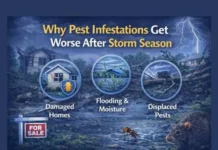














Storm season doesn’t just leave behind fallen branches and damaged gutters. For many homeowners, the real problem begins after the weather clears. Pest activity often spikes in the weeks following heavy rain, strong winds, and flooding. Homes that were pest-free before a storm can suddenly develop serious infestations, and it’s rarely a coincidence.
Storms change the environment both inside and outside your property. They displace pests, damage structures, and introduce moisture into places that should stay dry. Together, these conditions create the perfect opening for infestations to take hold and worsen quickly.
Storms Don’t Just Damage Roofs, They Open Your Home to Pests
Severe weather disrupts the natural habitats of rodents and insects. When storms destroy nests, flood burrows, or reduce outdoor food sources, pests look for immediate shelter. Homes offer warmth, dryness, and protection, especially when storms have already weakened entry points.
Once pests gain access, infestations tend to escalate faster than usual. Structural damage allows repeated entry, while moisture accelerates breeding cycles. Without prompt action, what starts as a minor issue can become a costly problem within weeks.
How Wind and Rain Compromise Roof Integrity
Your roof is one of the most important barriers to pests. Storm conditions place extreme stress on roofing materials, even when damage isn’t obvious from the ground.
High winds can lift roof tiles, loosen ridge capping, or separate flashing around chimneys and vents. Heavy rain then exploits these gaps, pushing water into roof cavities and wall spaces. Even small openings are enough for pests to enter.
Rodents can squeeze through gaps far smaller than most people expect. Cockroaches and insects need even less space. Once roof integrity is compromised, your home becomes vulnerable until repairs are completed.
Why Rats Move Indoors After Severe Weather
Storms are one of the most common triggers for sudden rodent activity. Flooded drains, destroyed nests, and soaked soil force rats and mice to relocate quickly. Homes become an attractive refuge, particularly roof voids, wall cavities, and garages.
This is where rodent control becomes critical. Rodents don’t just shelter indoors temporarily. Once they find a safe, dry space, they often stay. They breed rapidly, chew insulation and wiring, and contaminate surfaces with droppings and urine.
Post-storm infestations are especially challenging because displaced rodent populations compete for limited shelter, pushing more of them into residential areas at the same time.
How Moisture From Leaks Attracts Cockroaches
Cockroaches thrive in damp, warm environments. Storm-related leaks create exactly the conditions they need to multiply. Moist insulation, wet wall cavities, and condensation from roof leaks provide constant access to water. This is a key factor in cockroach survival.
Effective cockroach pest control often starts with moisture control. Even if food sources are limited, cockroaches can survive and breed as long as water is present. Storm damage that goes unnoticed can allow infestations to establish deep within walls, ceilings, and subfloors before homeowners realise there’s a problem.
Once established, cockroaches spread quickly through plumbing lines, roof spaces, and shared wall cavities.
The Window Between Storm and Infestation – Why Timing Matters
There is a critical period after storm season when infestations are most likely to begin. Structural damage is fresh, moisture hasn’t dried out, and pests are actively searching for shelter. Delaying inspections or repairs during this window significantly increases infestation risk.
Prompt reroofing plays a key role in pest prevention. Sealing gaps, repairing flashing, and replacing damaged tiles early can stop pests before they gain access. Once pests settle inside, repairs alone won’t resolve the problem. Professional pest treatment becomes necessary.
This timing is why many infestations seem to “appear suddenly” weeks after storms, even though the entry points were created earlier.
Post-Storm Checklist for Homeowners
After storm season, early inspection can prevent long-term pest issues. Pay attention to subtle changes around your property and inside your home.
A short post-storm check should include:
- Inspecting roof tiles, flashing, and gutters for visible damage
- Noticing musty smells, damp patches, or ceiling stains
- Listening for scratching or movement in the roof spaces
- Watching for increased insect activity, especially at night
These signs often appear before full infestations develop. Acting early makes solutions simpler and less expensive.
Prompt Structural Repair Is the First Line of Pest Defence
Pest infestations after storm season aren’t random. They’re usually the result of structural damage, displaced pests, and hidden moisture working together. Ignoring roof issues or minor leaks gives rodents and insects exactly what they need to move in and multiply.
Addressing storm damage quickly, controlling moisture, and responding early to pest activity reduces the risk of severe infestations. In most cases, prevention starts with the structure of the home, not just pest treatment after the fact.
FAQs
Why do pests appear weeks after a storm, not immediately?
Pests often enter shortly after storms, but take time to breed and become noticeable.
Can small roof damage really cause infestations?
Yes. Even minor gaps can allow rodents and insects to access roof cavities.
Do storms increase rodent populations?
Storms don’t increase numbers, but they force rodents into homes at the same time.
Are cockroaches more active after heavy rain?
Yes. Increased moisture accelerates breeding and survival.
Should roof repairs come before pest treatment?
Ideally, yes. Sealing entry points prevents reinfestation after treatment.