
































The term freeware sounds straightforward, yet it causes constant confusion in computing. Many people assume freeware means “no rules” or “completely free software.” That assumption leads to license violations, security risks, and poor software choices.
In reality, freeware has a very specific meaning. It refers to software that costs nothing to use, but it does not automatically grant freedom to modify, share, or use it commercially. Understanding this difference matters, especially in professional, educational, and business environments.
This blog explains freeware meaning in computer terms, how freeware works, its function, its license rules, restrictions, and how it differs from free software. Everything is explained slowly, clearly, and with real context.
Freeware Meaning in Computer Terms
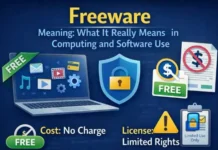
In computing, freeware refers to software that users can download and use without paying a fee. The keyword here is price, not freedom.
When a developer releases freeware, they are saying:
- “You don’t need to pay money to use this software.”
They are not automatically saying:
- “You can edit this software.”
- “You can sell this software.”
- “You can use this software however you want.”
The developer still owns the software. The user is only granted permission to use it under certain conditions.
also read : – Google Voice vs RingCentral: Which One Should You Use? (Real Breakdown, Pros, Costs)
What Freeware Actually Means
At its core, freeware means free of charge. That’s all it guarantees.
Freeware usually:
- installs without payment
- works without a time limit
- offers full basic functionality
But freeware usually does not:
- provide source code
- allow modification
- allow redistribution
- allow unrestricted commercial use
Those rights depend entirely on the license.
Why Freeware Exists
Developers release freeware for practical reasons, not charity alone.
Some want to:
- attract users to a paid product
- promote a brand or service
- gain trust in a market
- provide a basic tool while charging for advanced features
Others release freeware because:
- the software solves a narrow problem
- maintenance costs are low
- community use benefits the developer
Freeware is often a strategic decision.
Function of Freewar
The function of freeware goes beyond just “being free.” It plays several roles in the software ecosystem.
Utility Function of Freeware
Many freeware programs exist to handle small, everyday tasks. These tools focus on doing one thing reliably.
Examples include:
- file viewers
- media players
- compression tools
- PDF readers
Their function is convenience. They reduce friction in daily computer use.
also read : – How a UPS System Protects Your Equipment from Power Failures
Productivity Function of Freeware
Freeware often supports productivity by offering basic versions of common tools.
This includes:
- text editors
- note-taking apps
- basic design tools
- lightweight task managers
Users who don’t need advanced features can rely on freeware long-term.
Educational Function of Freeware
Freeware plays a major role in education.
Students and beginners use freeware to:
- learn software skills
- practice coding
- explore creative tools
Free access removes financial barriers to learning.
Promotional Function of Freeware
Some freeware exists mainly to promote a paid product or service.
In these cases:
- the freeware version works fully
- premium features are locked
- upgrades are encouraged
This model is common in modern software.
How Freeware Is Distributed
Freeware reaches users through several channels, each with risks and benefits.
Official Developer Websites
This is usually the safest source. Developers control:
- updates
- downloads
- license terms
Users get the cleanest version here.
App Stores and Platforms
Mobile and desktop app stores distribute a large amount of freeware. These platforms often review apps, adding a layer of trust.
Third-Party Download Sites
Some freeware appears on download portals. These sites may bundle installers or ads. Users should read prompts carefully.
Freeware License Meaning
The freeware license meaning defines the legal rules behind the “free” label.
A freeware license explains:
- who may use the software
- how it may be used
- what is forbidden
Ignoring the license does not make it invalid.
also read : – App Lock For IPhone
What a Freeware License Usually Allows
Most freeware licenses allow:
- personal use
- installation on personal devices
- use without time limits
These permissions are explicit.
What a Freeware License Often Restricts
Many freeware licenses restrict:
- modification of the program
- reverse engineering
- redistribution
- use in commercial settings
Violating these terms can cause legal issues.
Restrictions on Freeware
Restrictions on freeware exist to protect the developer’s control over their work.
No Source Code Access
Most freeware is closed source. Users cannot see or change the internal code. This separates freeware from open source software.
No Modification Rights
Even small changes are usually forbidden. Creating custom versions or plugins may violate the license.
Commercial Use Limits
Some freeware is “free for personal use only.” Using it in a business, office, or paid service may require a license.
Ads and Data Usage
Some freeware includes advertising or data collection. The cost shifts from money to attention or data.
also read : – Magic Hour: The Best AI Image Editor with Prompt-Free Editing and Face Swap Magic
Differences Between Freeware and Free Software
This distinction is critical.
Freeware
Freeware focuses on price.
- free to use
- usually closed source
- limited permissions
Free Software
Free software focuses on freedom.
- source code available
- modification allowed
- redistribution allowed
Free software may still cost money.
Why People Confuse Freeware and Free Software
Language causes confusion. The word “free” has two meanings:
- free as in price
- free as in freedom
Freeware uses the first meaning. Free software uses the second.
Freeware vs Shareware
Shareware differs from freeware in intent.
Shareware:
- free to try
- limited time or features
- payment expected
Freeware:
- full use
- no time limit
- no payment required
also read : – Best Reminder Apps For IPhone: Word Trying Reminder Apps For IOS Users
Freeware vs Open Source Software
Open source software provides source code and modification rights. Freeware usually does not.
Some open source software is free. Most freeware is not open source.
Freeware in Business Use
Businesses must be careful with freeware.
Using freeware at work without checking the license may violate terms. Audits often catch this mistake.
Advantages of Freeware
Freeware offers clear benefits.
Cost Savings
No purchase or subscription reduces expenses.
Easy Access
Freeware installs quickly without contracts or approval processes.
Broad Availability
Almost every task has a freeware option.
Limitations of Freeware
Freeware also has drawbacks.
Limited Support
Support often depends on forums or documentation.
Feature Restrictions
Advanced tools are often reserved for paid versions.
Uncertain Updates
Some freeware stops receiving updates without notice.
Security Risks With Freeware
Not all freeware is trustworthy. Some contains:
- bundled software
- hidden tracking
- outdated security
Source and reputation matter.
Freeware and Privacy Concerns
Freeware may collect usage data. Reading privacy policies is important, especially in regulated environments.
How to Evaluate Freeware Before Using It
Before installing freeware, ask:
- Who made it
- What does the license allow
- Is it updated
- Does it collect data
These checks reduce risk.
Common Myths About Freeware
Common myths include:
- “Freeware is always safe”
- “Freeware can be used anywhere”
- “Freeware equals open source”
None of these are guaranteed.
Freeware in Education
Schools rely on freeware to reduce costs and improve access. Many students learn core skills using freeware tools.
Ethical Use of Freeware
Respecting licenses supports developers. Misuse discourages future free releases.
When Freeware Makes Sense
Freeware works well when:
- budgets are tight
- needs are simple
- licenses are clear
When Freeware Is the Wrong Choice
Freeware may not fit when:
- compliance is critical
- support is essential
- long-term stability is required
The Future of Freeware
Freeware continues to evolve through:
- freemium models
- ad-supported tools
- cloud-based services
The definition stays the same. The delivery changes.
Why Understanding Freeware Meaning Matters
Misunderstanding freeware leads to:
- legal trouble
- security issues
- poor decisions
Understanding protects users and organizations.
also read : – How to get unbanned from tinder? Solving your issues.
Final Thoughts on Freeware Meaning
Freeware means free to use, not free of rules. It offers accessibility and value but comes with boundaries set by licenses. Knowing those boundaries helps users make informed, ethical, and safe choices.
Freeware is powerful when used correctly—and risky when misunderstood.
FAQs: Freeware Meaning
What is freeware meaning in computer terms
Software available at no cost, usually with usage restrictions.
Is freeware the same as free software
No. Freeware focuses on price, free software focuses on user freedom.
Can freeware be used for business
Only if the license allows it.
What is a freeware license
A document defining how freeware may be used.
Is freeware always safe
No. Source and license matter.